

Chicago’s Potential
How Better Structure Could Unlock Growth

Every city has a permission structure, some of it formal, written into permits, zoning rules, licenses, inspections, budgets, procurement policies, public hearings, and ordinances, and much of it informal, learned through the experience of trying to do something useful. The person opening a restaurant learns it while trying to pass inspections and get a license. The nonprofit learns it while trying to apply for a city grant. The developer learns it while trying to build housing. The neighborhood group learns it while trying to understand when a public decision was actually made and whether their input came early enough to matter.
A city communicates through those experiences, telling people what is welcome, what is difficult, what requires patience, what requires relationships, what can move quickly, and what will get stuck somewhere between ambition and approval.
One useful way to understand Chicago’s growth challenge is through that daily experience of permission, because the city has extraordinary assets, deep civic energy, and neighborhoods that people care about intensely, while the public path for acting on that energy can still feel slower, less clear, and more relationship-dependent than it should.
Chicago has a regional economy of global scale, with World Business Chicago reporting that Chicagoland’s economy topped $886 billion in 2024. It has one of the country’s great lakefronts, one of its most recognizable skylines, one of its most important transportation networks, and neighborhoods with identities strong enough to anchor memory across generations. According to the Census Bureau, the city’s 2024 population estimate was 2,721,308, still making Chicago the kind of large, dense, culturally powerful city that few places in the country can match.
The question for Chicago is how to make more of that strength easier to act on.
The city says it wants growth, housing, neighborhood investment, small businesses, trust, safety, and civic participation. Those goals appear across speeches, plans, budgets, campaigns, community meetings, and economic development strategies. The harder work is building a structure that gives people a clearer path to help produce those outcomes.
A city that wants more small businesses has to care about how it feels to open one. A city that wants more housing has to care about how predictable the housing process feels. A city that wants more trust has to care about whether residents can understand who made a decision, when it was made, and how public input shaped it. Chicago has the people, institutions, culture, and physical assets to grow into a stronger version of itself. Better structure would change the permission signals the city sends, making the things Chicago already says it values easier to do.
A city’s process is part of its personality
Chicago’s personality is usually described through its culture, architecture, food, neighborhoods, sports, music, politics, grit, humor, and civic pride. Those are real parts of the city’s identity. Public process is part of that identity too, because people eventually judge a city by how it behaves when they need something from it.
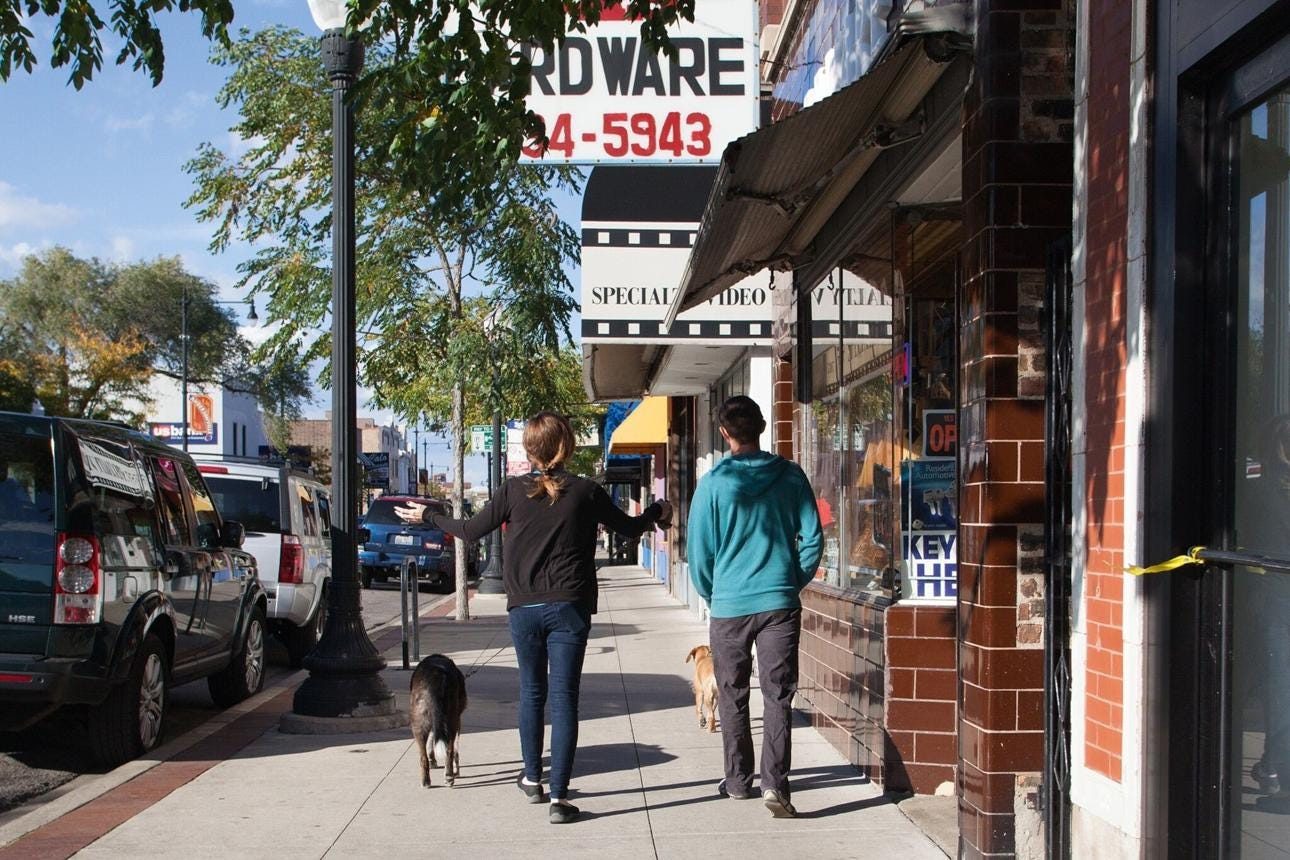
A person may love Chicago and still feel exhausted by the steps required to open a storefront. A block club may believe in public participation and still wonder why it is responding to plans after the important choices already seem settled. A small developer may want to build housing near transit and still conclude that the approval path is too uncertain. A nonprofit may want to partner with government and still find that funding cycles, reporting requirements, and departmental silos consume time that could be spent serving people.
Chicago has already recognized part of this problem through the city’s Cut the Tape work, which focuses on reducing complexity in licensing and permitting for small businesses. That kind of work matters because process shapes who can participate, how quickly they can move, and whether the city feels like a partner or an obstacle.
When public systems are difficult to understand, people with money, time, staff, consultants, and political relationships can keep going. People without those advantages face a different calculation. The price of complexity is paid in delay, uncertainty, legal fees, missed openings, abandoned projects, smaller ambitions, and civic frustration.
A city can have serious standards and still make the path to meeting those standards clear. Health, safety, accessibility, labor protections, environmental review, affordability requirements, and community input all matter. The issue is whether the structure helps serious people meet serious expectations or forces them to prove their endurance before they can contribute.
What Chicago makes hard
Chicago’s permission structure shows up most clearly in the areas where the city’s stated goals and daily processes do not always point in the same direction.
The city wants active neighborhood corridors, but opening and sustaining a small business can still require a level of navigation that favors people who already understand the system. A restaurant, childcare provider, arts space, salon, corner store, contractor, or neighborhood retailer may need licenses, inspections, zoning clarity, buildout approvals, financing, insurance, and landlord coordination before a single customer walks in. Each requirement may have a reason. The burden comes from the combined experience, especially when timelines are unclear or the next step depends on finding the right person to explain the previous one.
The city wants more housing, but its land use structure often makes housing feel like a case-by-case political negotiation rather than a predictable civic priority. The Metropolitan Planning Council has written that Chicago’s tradition of aldermanic prerogative gives alders significant influence over zoning and permitting decisions in their wards, creating disparities in investment and inviting corruption risk. MPC’s more recent zoning work, drawing on Urban Institute research, found that 41 percent of Chicago is zoned only for single-family homes or two-flats, while most community areas built fewer than 500 new homes from 2006 to 2024. The same analysis found that 60 percent of new homes permitted during that period were concentrated in five community areas near and around the Loop.
Those numbers describe a permission structure that makes some forms of growth much easier in some places than others. A city that wants population stability, affordability, neighborhood vitality, and transit-oriented growth needs a clearer relationship between what its plans say and what its rules allow.
The city wants community participation, but participation often arrives in a reactive posture. Residents are asked to attend meetings, review proposals, register concerns, support or oppose projects, and offer local knowledge. That participation can be meaningful, but too often people are asked to enter the process after a proposal has already taken shape, after the financing assumptions are set, after a department has narrowed the options, or after ward-level politics has framed the debate.
When participation comes late, meetings become pressure valves. Residents are left to fight over a specific project because the larger planning conversation did not happen early enough, clearly enough, or consistently enough. Developers and public agencies experience community engagement as a hurdle. Residents experience it as a test of whether anyone was listening.
The city wants public trust, but residents often struggle to see who is responsible for what. Some authority sits with the mayor. Some sits with the City Council. Some sits with departments. Some sits with sister agencies. Some sits with Springfield. Some sits in ward offices. Some sits in informal relationships that never appear on an organizational chart. Complexity at this scale cannot be eliminated, but it can be explained much better than it is.
When responsibility is hard to locate, frustration spreads across the whole system. A delayed project, a confusing approval, an unclear budget choice, or a broken service commitment becomes evidence that the city cannot act coherently, even when the actual responsibility is more specific.
Complexity decides who gets to participate
The fairest version of Chicago would give more people a practical way to contribute to the city’s future. That includes residents, neighborhood organizations, entrepreneurs, developers, artists, tradespeople, civic groups, educators, faith leaders, employers, and block-level problem-solvers. The city has an unusually deep bench of people who know how to make useful things happen.
A large developer can absorb delay into a project budget. A first-time builder cannot. An established organization may know which department to call. A new nonprofit may spend months learning the landscape. A well-capitalized business can hire a lawyer, architect, expeditor, accountant, and consultant. A neighborhood entrepreneur may be risking savings, credit, and family support before the city process even becomes clear.
Access becomes a form of capital when the public process is hard to understand. Relationships become a form of infrastructure when rules are inconsistently explained. Time becomes a barrier when meetings, hearings, applications, revisions, and approvals stretch across months without a clear map.
This is where structural reform becomes a growth issue and a fairness issue at the same time. Chicago cannot fully benefit from the energy of its residents if too many people have to fight through confusion before they can act. The city leaves talent unused when the path to contribution is easiest for people who already have advantages.
A better permission structure would give people a clearer understanding of the path, the standards, the timeline, the decision-maker, the appeal, and the reason for the outcome. That kind of clarity changes how people experience government. It also changes how much they are willing to attempt.
What the city should make easier
Chicago should make it easier to do the things that align with the city’s own goals.
That starts with neighborhood business formation. A person trying to open a useful storefront should be able to understand the sequence of steps, the expected timeline, the common pitfalls, the cost range, and the office responsible for each approval. A city with commercial corridors that need activity should treat a serious business opening as a civic opportunity, while still holding the business to clear public standards.
It continues with housing. If Chicago wants more housing near transit, more affordability, more population stability, and more options for families, workers, seniors, and young adults, then its zoning and approval structure should make those priorities visible. The city can still preserve neighborhood character, require affordability, protect safety, and invite community input. The structure should help everyone understand where more housing is encouraged, which standards matter, how objections will be evaluated, and when a decision will be made.
The same principle applies to vacant land. Chicago has blocks where the question is whether useful change can happen at all. Side lots, commercial vacancies, underused public land, empty industrial parcels, and long-stalled development sites all raise different issues, but they share one question: how does the city help turn unused or underused space into public value? A permission structure built for growth would make productive reuse easier to initiate, easier to understand, and easier to track.
Public participation also needs a better structure. Residents should know when their input can shape a plan, how that input will be weighed, and what the city decided afterward. Community engagement should produce a record that people can see. Public meetings should connect to timelines, tradeoffs, and next steps. When the city asks people to show up, it should also show them how their time entered the decision.
A better structure would also make it easier to understand public priorities. Budgets, capital plans, grant programs, departmental goals, ward-level projects, and citywide strategies should connect more clearly. Residents should be able to see how a stated goal moves through funding, implementation, measurement, and revision.
Structure as an invitation
The best version of structural reform would feel less like a lecture about government and more like an invitation to build the city.
It would tell the small business owner that Chicago wants the storefront filled and has made the process understandable. It would tell the neighborhood group that participation begins early enough to matter and ends with a report back. It would tell the builder that housing is welcome where the city has planned for it, with standards clear enough to guide investment before conflict takes over. It would tell the nonprofit that partnership with government can be organized around shared goals rather than repeated reinvention.
That invitation matters because people decide where to place their effort. A family decides whether to stay. A graduate decides whether to build a career here. An entrepreneur decides whether to open in Chicago or somewhere easier. A community organization decides whether to keep engaging after years of uncertain results. A developer decides whether the risk is worth it. A civic leader decides whether a public goal has enough structure behind it to justify real commitment.
Cities grow when more people believe their effort has a path.
Chicago already generates loyalty. People love this city with a depth that cannot be manufactured by a marketing campaign. The opportunity is to make that loyalty easier to convert into action. Love of place can bring people into public life, but structure determines whether that energy becomes housing, businesses, safer blocks, stronger corridors, better services, and more durable trust.
The city we are giving people permission to build
Chicago’s potential is visible in the people trying to do useful things every day. They are opening restaurants, coaching teams, rehabbing buildings, running arts spaces, organizing neighbors, caring for elders, mentoring young people, building companies, managing classrooms, leading congregations, activating commercial corridors, and trying to solve problems close to the ground.
The city’s structure should make that work easier to begin, easier to navigate, and easier to connect to a larger civic direction.
Growth in Chicago should feel like more people finding a place in the city’s future. More businesses opening without needing insider knowledge. More housing built where the city’s own goals say housing belongs. More residents shaping plans before they become fights. More public decisions that can be understood by the people affected by them. More neighborhoods seeing investment arrive through a clear framework rather than a one-off exception.
That is the promise of better structure. It changes the city’s daily signals. It gives people clearer permission to build, stay, invest, participate, and take responsibility for the next version of Chicago.
A city with Chicago’s assets should be easier to act on. Better structure is how more of the city’s potential becomes part of ordinary life.